
About NASA
NASA's vision: To reach for new heights and reveal the unknown so that what we do and learn will benefit all humankind.
To do that, thousands of people have been working around the world -- and off of it -- for more than 50 years, trying to answer some basic questions. What's out there in space? How do we get there? What will we find? What can we learn there, or learn just by trying to get there, that will make life better here on Earth?
In the early 21st century, NASA is extending our senses to see the farthest reaches of the universe, while pushing the boundaries of human spaceflight farther from Earth than ever before.Humankind is poised to take its Next Giant Leap, far beyond the frontiers of exploration we've reached to date. On Earth and in space, the agency is developing new capabilities to send future human missions to an asteroid and Mars. Mars once had conditions suitable for life. Future exploration on our Journey to Mars could uncover evidence of past life, answering one of the fundamental mysteries of the cosmos: Does life exist beyond Earth?
The Journey to Mars begins aboard the International Space Station, where astronauts are extending permanent human presence in space and performing research that will help us understand how humans can live and work off Earth for long periods. U.S. commercial companies are supplying cargo to the space station, and will soon launch astronauts once again from U.S. soil., helping foster development of private-sector aerospace. Part of the U.S. portion of the space station has been designated as a national laboratory, and NASA is committed to using this unique resource for wide-ranging scientific research.
To send astronauts deeper into the solar system, NASA is developing the most advanced rocket and spacecraft ever designed. NASA's Orion spacecraft will carry four astronauts to missions beyond the moon, launched from Florida aboard the Space Launch System (SLS) -- an advanced heavy-lift rocket that will provide an entirely new national capability for human exploration beyond Earth's orbit.
NASA's Future
To help test other spaceflight capabilities to meet the goal of sending humans to Mars, including advanced propulsion and spacesuits, NASA is developing the Asteroid Redirect Mission first-ever mission to identify, capture and redirect a near-Earth asteroid to a stable orbit around the moon, where astronauts will explore it in the 2020s, returning with samples. An unprecedented array of science missions is seeking new knowledge and understanding of Earth, the solar system and the universe.
We're studying Earth right now through current and future spacecraft helping answer critical challenges facing our planet: climate change, sea level rise, freshwater resources and extreme weather events.
NASA's aeronautics team is working with other government organizations, universities, and industry to fundamentally improve the air transportation experience and retain our nation's leadership in global aviation.
A fleet of robotic explorers is on and around Mars, dramatically increasing our knowledge about the Red Planet, paving the way for future human explorers.
Multiple NASA missions are studying our sun and the solar system, unraveling mysteries about their origin and evolution. By understanding variations of the sun in real-time, we can better characterize space weather, which can impact exploration and technology on Earth.
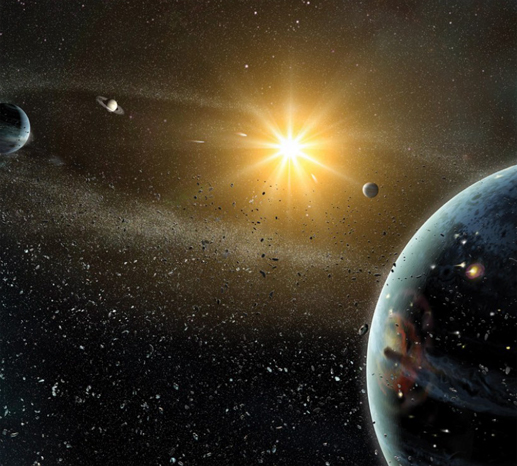
The New Horizons spacecraft nears Pluto for a July 2015 rendezvous, which will provide the closest views we've ever had of the dwarf planet. The Juno spacecraft is poised to reach Jupiter in 2016, and will peer beneath its dense gas to reveal the mysteries of its core.
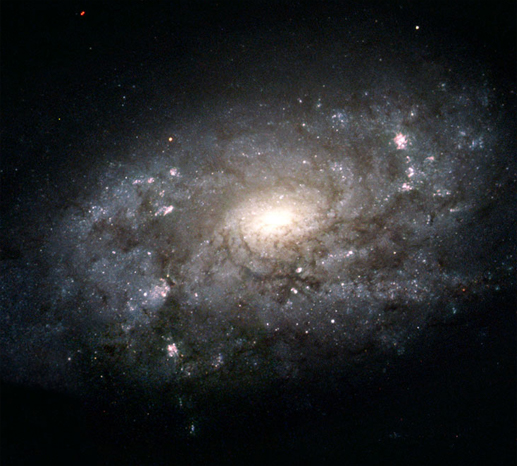
NASA telescopes also are peering into the farthest reaches of the universe and back to its earliest moments of existence, helping us understand the universe's origin, evolution, and destiny.
Entering its 25th year, the Hubble Space Telescope continues to explore as NASA develops its successor, the James Webb Space Telescope, which will capture light from the universe's earliest stars.
It's an exciting time at NASA as we reach for new heights to reveal the unknown and benefit humankind. See a list of NASA's current missions and find out what we're launching next!